
Less repetitive work. Better connected systems.
Custom software, integrations and automation shaped around the way your business works.
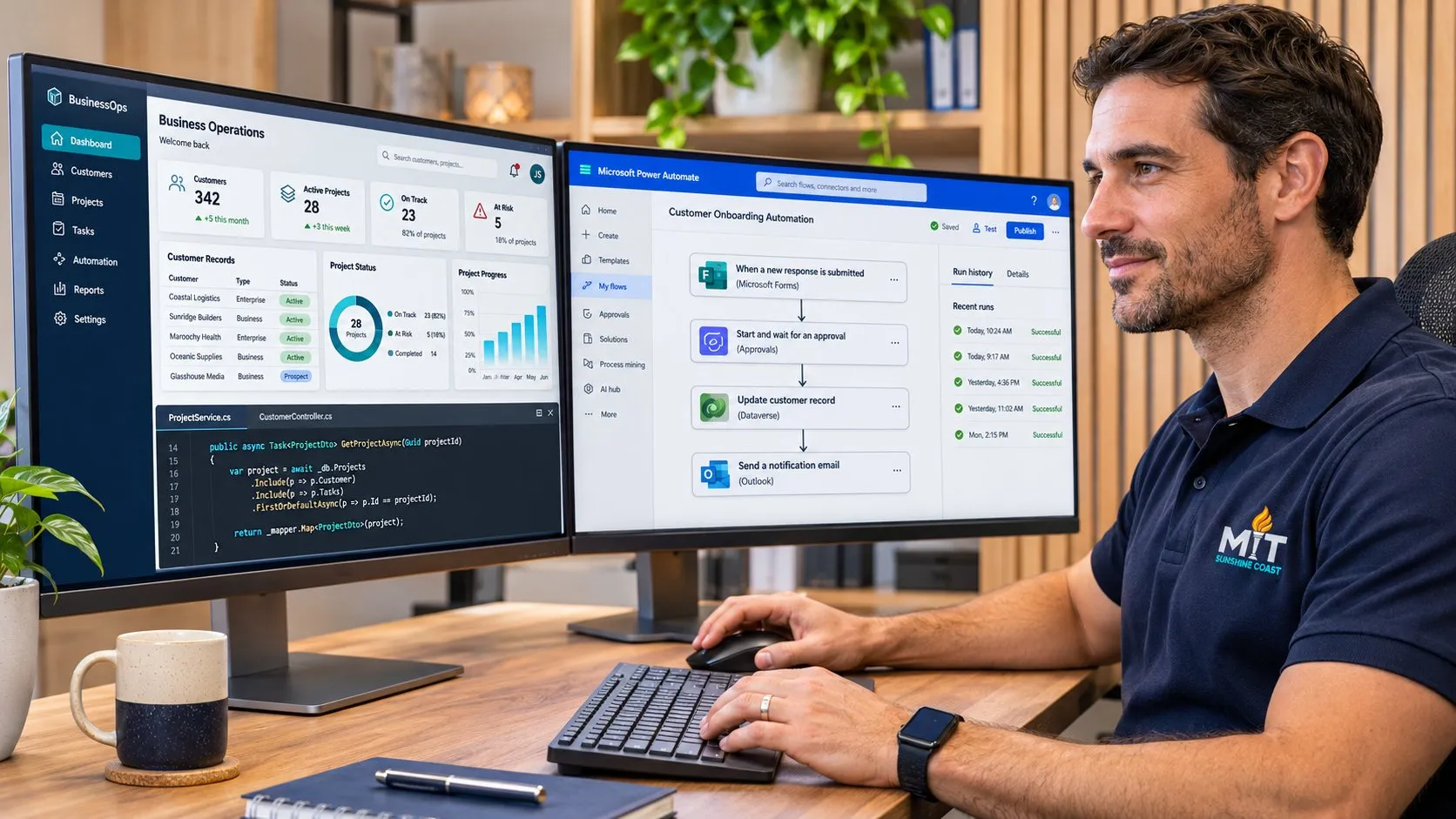
- Reduce duplicate handling Identify where information is entered more than once.
- Connect existing systems Explore supported ways to exchange information.
- Improve visibility Bring relevant operational information into clearer view.
- Plan for ongoing support Define maintenance, documentation and support needs.
Start with the process. Choose the right solution.
We review how work happens today, where time is lost and whether an existing product, integration or custom build is the best fit.
Understand the workflow
Map the people, systems, information and handovers involved.
Assess the options
Consider existing tools, supported integrations and targeted development.
Agree a practical scope
Define priorities, dependencies and the next stage of work.
Software and automation built around your operation.
For industrial projects, responsibilities for control systems, specialist engineering, machinery safety and commissioning are defined during scoping.
What could this look like in your business?
These are illustrative applications, not client case studies. The right approach depends on your processes, systems and data.
Re-entering orders
A connected order workflow with validation and status tracking.
Paper forms
Digital capture that routes information to the appropriate team.
Manual reports
Operational dashboards using available data from agreed sources.
Repeated document preparation
Documents assembled from approved data and templates.
Missing information
Validation rules, reminders and exception notifications.
Disconnected records
Supported integrations that synchronise agreed information.
Experience beyond the office.
Our team brings experience across business software, systems integration and manufacturing automation. That experience informs how we plan around operational requirements, technical dependencies and the people who use the system.
QR reader integration
QR-code reader integration with production control systems to reduce manual entry.
Produce package tracking
Custom software for tracking, counting and sorting individual produce packages.
Production dashboards
Machine and process information presented for operational visibility.
Operator interfaces
Purpose-built buttons and panels for recording events and initiating defined actions.
Selected examples from our team’s experience. Client identities and confidential project details are not shown.
Make the business case before you build.
Assess the effort, constraints, costs and expected benefits before committing to a larger project. We use your own figures and priorities to compare the options and define how improvement will be measured.
- Staff time and repeated work
- Errors and delays
- Existing software and dependencies
- Costs and measurable outcomes
From first discussion to working system.
Understand
Review the workflow, users, systems and intended outcome.
Scope
Agree priorities, deliverables, dependencies and acceptance criteria.
Build & review
Develop in agreed stages and review progress with your team.
Test & release
Test agreed workflows and plan deployment, data changes and rollback arrangements.
Handover & support
Provide agreed documentation, training and ongoing support arrangements.
Stages, acceptance criteria and responsibilities are agreed for each project.
Built with the next stage in mind.
A useful application needs more than a successful launch. We plan how it will be accessed, tested, maintained and supported as your business changes.
- Access & data handlingDefine user access, data sensitivity and appropriate controls.
- Testing & recoveryAgree important test scenarios, backup requirements and recovery arrangements.
- Documentation & dependenciesRecord operating information, third-party components and hosting requirements.
- Maintenance & supportDefine updates, change requests and ongoing support responsibilities.
Requirements are agreed during scoping and depend on the application and how it is used.
Know what you are investing in.
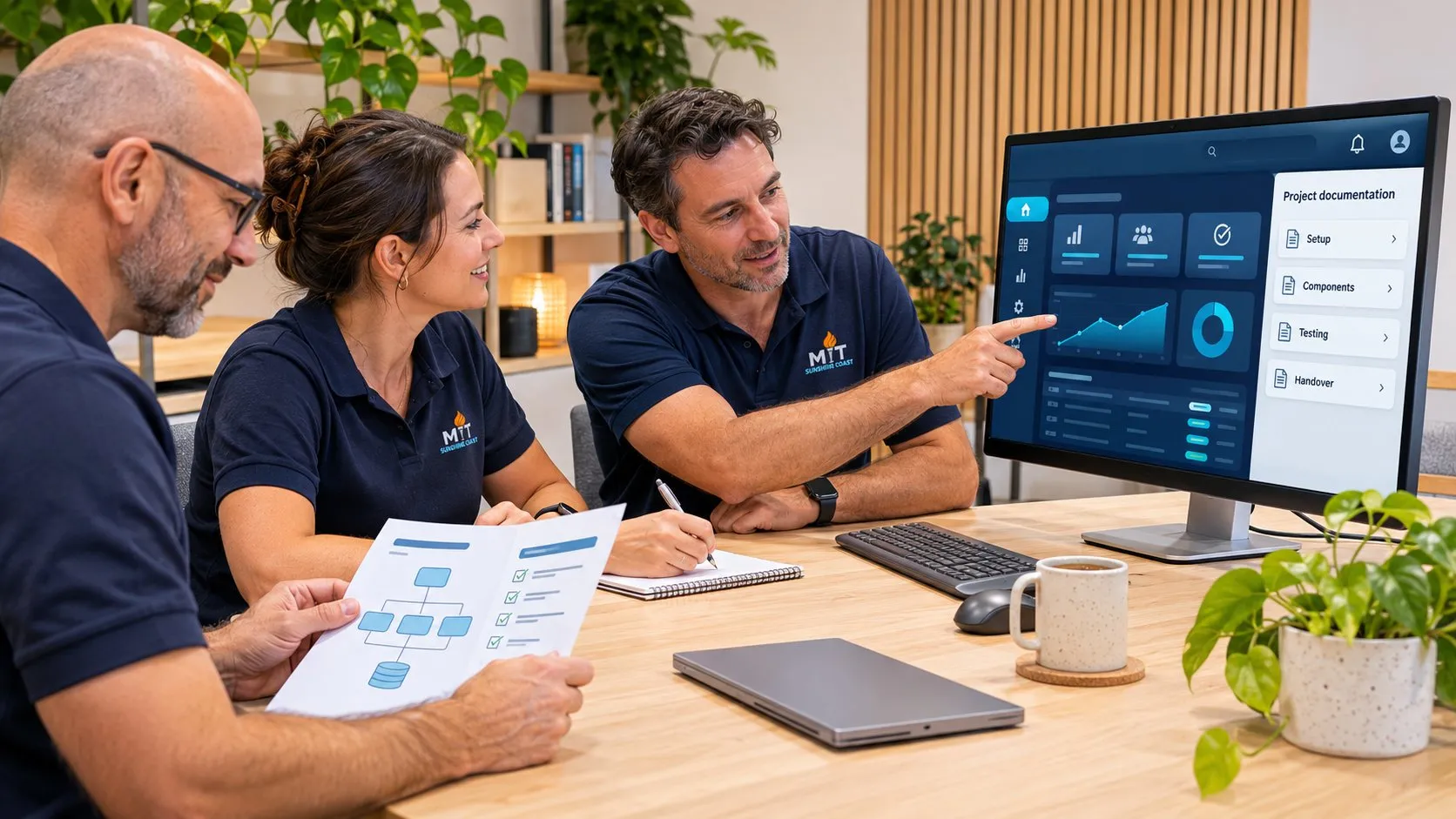
Your proposal defines deliverables, milestones, responsibilities and ongoing costs. We agree how changes are handled so you can make informed decisions as the project progresses.
- Scope & acceptance
- Changes & dependencies
- Ownership & usage rights
- Source code & handover
- Hosting & support
Let’s improve the way your business works.
Tell us where repetitive work, disconnected systems or operational bottlenecks are getting in the way. We’ll help you identify a practical next step.